
Reviewed By Dr. Jodi Kuhn
Reading time: 3 minutes
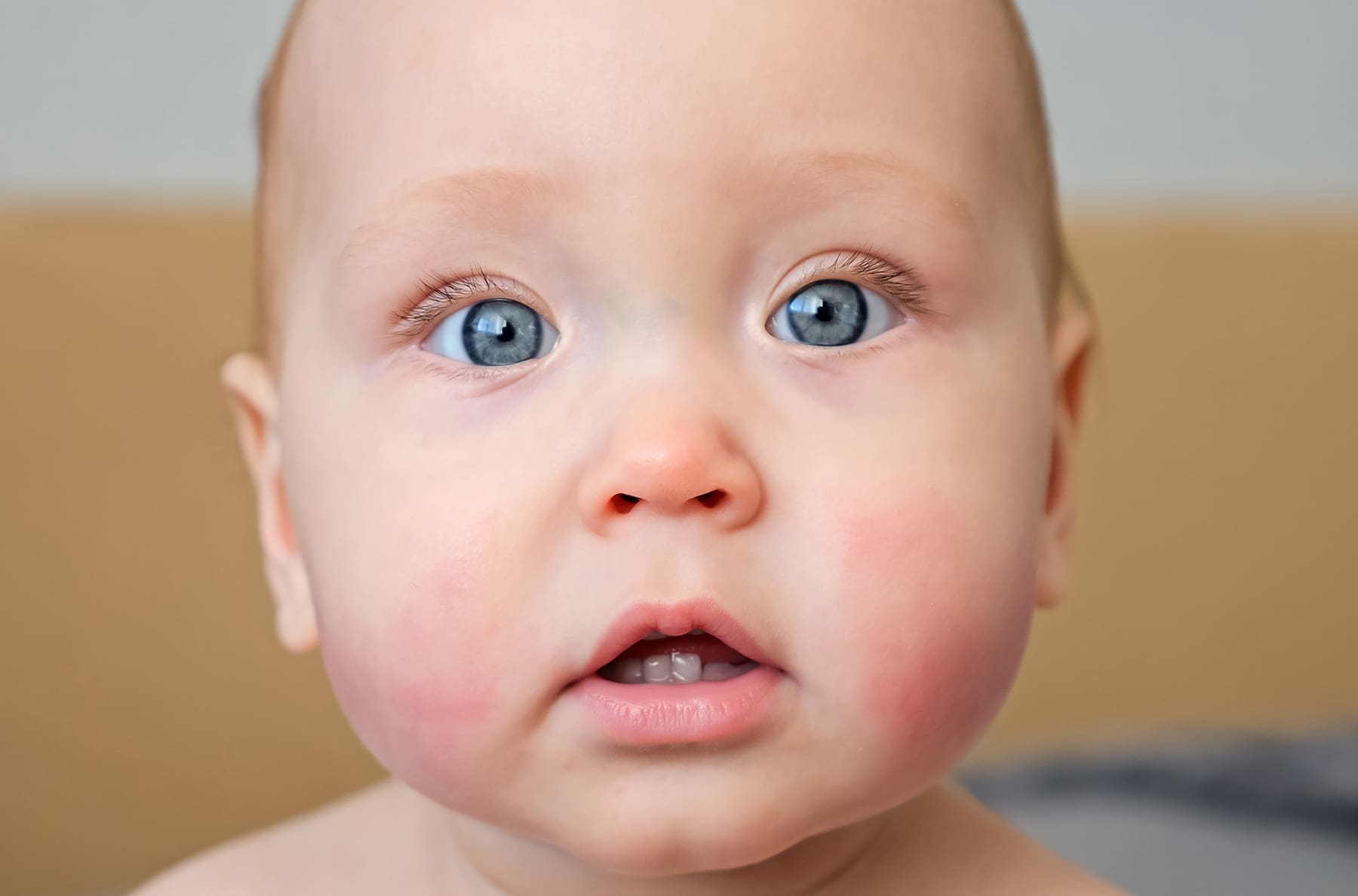
You might notice your baby’s cheeks turning pink or bright red during teething, sometimes on just one side. This is a normal sign that new teeth are coming in. As teeth push through the gums, increased blood flow can cause warmth, redness, or a mild rash around the mouth. It’s usually temporary and nothing to worry about.
We provide dental care for the whole family at our offices in Denver, Aurora, Thornton, and Hampden. We proudly accept Medicaid and make quality dental care accessible for every child.
Table of Contents
Common Signs of Teething in Babies
Every baby experiences teething differently, but these are some of the most common signs:
- Flushed or red cheeks
- Drooling more than usual
- Chewing or biting on toys, fingers, or blankets
- Swollen or tender gums
- Irritability or restlessness
- Slightly raised temperature (but not a true fever)
- Disturbed sleep or appetite changes
If your baby also has a fever, rash elsewhere on the body, or seems unwell, it’s best to call your pediatrician, those aren’t typical teething symptoms.
Why Teething Causes Red Cheeks or Facial Rash
A teething rash on the face happens for two main reasons:
- Increased blood flow and inflammation: When teeth erupt, the gums become inflamed and the skin nearby can appear red and warm.
- Drool irritation: Extra saliva drips onto the skin around the mouth, chin, and cheeks. Over time, that moisture breaks down the skin’s natural barrier, leading to chapped or rash-like irritation.
You might see small bumps or dry patches near the lips or lower cheeks, this is drool rash, not an allergy or infection.
How to Soothe Red Cheeks from Teething
Simple home care can help calm irritation and prevent further redness:
- Keep the area dry: Gently pat (don’t rub) drool throughout the day using a soft cloth.
- Use a protective barrier: Apply a thin layer of petroleum jelly or baby-safe cream to protect skin from moisture.
- Offer teething relief: Give your baby a chilled (not frozen) teething ring or a clean, cold washcloth to chew.
- Stay hydrated: Keep your baby drinking breast milk, formula, or small sips of water.
- Maintain comfort: Teething can make sleep tough. Try extra cuddles, gentle gum massages, and a calm bedtime routine.
When to Call Your Pediatric Dentist
Red cheeks from teething usually fade on their own within a few days. However, contact your dentist if you notice:
- A persistent rash that spreads or oozes
- Cracked or bleeding skin around the mouth
- Signs of tooth eruption problems (e.g., gums not breaking through)
- Discomfort lasting longer than a week
At Youth Dentistry and Orthodontics, we help parents navigate every stage of teething—from sore gums to their first dental visit. Early exams ensure baby teeth come in healthy and straight, setting the stage for lifelong oral health.
Caring for Your Baby Through Teething
Red cheeks and drooling are common signs of teething and usually nothing to worry about. With gentle care and regular checkups, you can help your baby stay comfortable as their new teeth come in. If you have any concerns or need guidance, our team at Youth Dentistry and Orthodontics is happy to help.
Contact Youth Dentistry and Orthodontics to schedule an appointment at any of our locations.
📍Denver Youth Dentistry and Orthodontics: 1400 Grove Street, Denver, CO 80204 | (303) 825-2295
📍Aurora Youth Dentistry and Orthodontics: 14251 E. 6th Avenue, Aurora, CO 80011 | (303) 343-3133
📍Thornton Youth Dentistry and Orthodontics: 550 E. Thornton Parkway, Suite 240A, Thornton, CO 80229 | (303) 280-8878
📍Hampden Youth Dentistry and Orthodontics: 7400 East Hampden Ave. Unit C1, Denver, CO 80231 | (720) 826-3694
FAQ
Why do babies get red cheeks when teething?
When teeth start breaking through the gums, increased blood flow and mild inflammation can cause redness and skin irritation on the cheeks. The warmth is temporary and part of baby teething, not usually a sign of illness.
How do I know if my baby is teething or sick?
Typical teething symptoms include drooling, swollen gums, and mild fussiness. However, if your baby develops a high fever, persistent crying, or signs of an ear infection, it’s best to contact your pediatrician. These symptoms aren’t caused by teething and may need medical attention.
Can teething cause red cheeks on just one side?
It’s common for redness to appear on only one side if a tooth is erupting more actively on that part of the mouth. As long as your child’s overall dental health is good and the redness fades with care, it’s nothing to worry about.
When should I schedule my baby’s first dental visit?
The American Academy of Pediatric Dentistry recommends scheduling your baby’s first appointment by their first birthday or within six months of the first tooth appearing. Early visits help monitor oral development and teach parents how to maintain strong dental health from the start.
